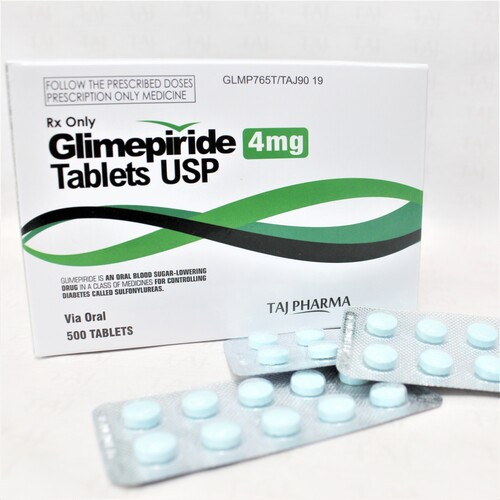
GLIMER
Composition:
GLIMER 2
Each uncoated tablet contains: Glimepiride USP 2mg
GLIMER 4
Each uncoated tablet contains: Glimepiride USP 4mg
List of Excipients: Microcrystalline Cellulose Powder, Lactose, Maize Starch, Purified Talc, Colloidal Anhydrous Silica, Magnesium Stearate, Crospovidone.
Pharmacodynamic Properties: Glimepiride is an orally active hypoglycaemic substance belonging to the sulphonylurea group. It may be used in non-insulin dependent (type 2) diabetes mellitus. Glimepiride acts mainly by stimulating insulin release from pancreatic beta cells. As with other sulfonylureas this effect is based on an increase of responsiveness of the pancreatic beta cells to the physiological glucose stimulus. In addition, glimepiride seems to have pronounced extrapancreatic effects also postulated for other sulfonylureas.
Pediatric Data: Not recommended for children below 12 years of age.
Pharmacokinetic Properties: Absorption: The bioavailability of glimepiride after oral administration is complete. Food intake has no relevant influence on absorption, only the absorption rate is slightly diminished. Maximum serum concentrations (Cmax) are reached approx. 2.5 hours after oral intake (mean 0.3 μg/ml during multiple dosing of 4 mg/daily) and there is a linear relationship between both Cmax and AUC (area under the time concentration curve). Distribution: Glimepiride has a very low distribution volume (approx. 8.8 litres), which is roughly equal to the albumin distribution space, high protein binding (>99%) and a low clearance (approx. 48 ml/min). Biotransformation and elimination: Mean dominant serum half-life, which is of relevance for the serum concentrations under multiple-dose conditions, is about 5 to 8 hours. After high doses, slightly longer half-lives were noted.
Therapeutic Indications: Glimepiride is indicated for the treatment of type 2 diabetes mellitus.
Dosage and Administration: 2mg and 4mg glimepiride per day or as directed by physician.
Mode of Administration: Oral.
Possible Side Effects: nausea, vomiting, diarrhoea, abdominal distension, abdominal discomfort and abdominal pain, which seldom lead to discontinuation of therapy.
Drug-Drug and Food Interaction: If glimepiride is taken simultaneously with certain other medicinal products, both undesired increases and decreases in the hypoglycaemic action of glimepiride can occur. For this reason, other medicinal products should only be taken with the knowledge (or at the prescription) of the doctor. Glimepiride is metabolized by cytochrome P450 2C9 (CYP2C9). Its metabolism is known to be influenced by concomitant administration of CYP2C9 inducers (e.g. rifampicin) or inhibitors (e.g. fluconazole). H2 antagonists, beta-blockers, clonidine and reserpine may lead to either potentiation or weakening of the blood-glucose-lowering effect.
Contraindication: Glimepiride is contraindicated in patients with hypersensitivity to glimepiride, other sulfonylureas or sulfonamides or to any of the excipients listed, insulin dependent diabetes, diabetic coma, ketoacidosis, severe renal or hepatic function disorders.
Warnings and Precautions for Use: Glimepiride must be taken shortly before or during a meal. When meals are taken at irregular hours or skipped altogether, treatment with "Glimepiride Tablets" may lead to hypoglycaemia. Possible symptoms of hypoglycaemia include: headache, ravenous hunger, nausea, vomiting, lassitude, sleepiness, disordered sleep, restlessness, aggressiveness, impaired concentration, alertness and reaction time, depression, confusion, speech and visual disorders, aphasia, tremor, paresis, sensory disturbances, dizziness, helplessness, loss of self-control, delirium, cerebral convulsions, somnolence and loss of consciousness up to and including coma, shallow respiration and bradycardia. Glimepiride Tablets contains lactose monohydrate. Patients with rare hereditary problems of galactose intolerance, the Lapp lactase deficiency or glucose-galactose malabsorption should not take this medicine.
Caution: Patients should be advised to take precautions to avoid hypoglycaemia whilst driving.
Pregnancy and Lactation: Risk related to the diabetes: Abnormal blood glucose levels during pregnancy are associated with a higher incidence of congenital abnormalities and perinatal mortality. So the blood glucose level must be closely monitored during pregnancy in order to avoid the teratogenic risk. The use of insulin is required under such circumstances. Patients who consider pregnancy should inform their physician. Not recommended for lactating mothers.
Overdose: Nausea, vomiting and epigastric pain may occur. The hypoglycaemia may in general be accompanied by neurological symptoms like restlessness, tremor, visual disturbances, co-ordination problems, sleepiness, coma and convulsions. Treatment: Treatment primarily consists of preventing absorption by inducing vomiting and then drinking water or lemonade with activated charcoal (adsorbent) and sodium-sulphate (laxative). If large quantities have been ingested gastric lavage is indicated, followed by activated charcoal and sodium-sulphate. In particular when treating hypoglycaemia due to accidental intake of glimepiride in infants and young children, the dose of glucose given must be carefully controlled to avoid the possibility of producing dangerous hyperglycaemia. Blood glucose should be closely monitored.
Storage Condition: Store below 30°C. Protect from light & moisture.
Presentation:
GLIMER 2: Blister Pack of 10's, 30's, 100's, 500's & 1000's
GLIMER 4: Blister Pack of 10's, 30's, 100's, 500's & 1000's
Manufactured by:
OA&J Pharmaceuticals Ltd.,
Plot No. IND/A/71/G/11,
Tema Heavy IndlArea, GHANA.